

Dangerous goods are regulated to prevent harm to people, property, and the environment. To keep rules consistent worldwide, the United Nations set up common systems for classifying hazards, sharing safety information, and setting transport conditions. In Europe, UNECE manages agreements to apply these rules for road, rail, and inland waterway transport.
Worldwide Express are specially trained in handling and shipping dangerous goods around the world. We can ensure that your packages are delivered in the safest possible way. By giving us the correct and relevant information we can assess your products courier needs and ship them accordingly.
Dangerous Goods are products that can be considered unsafe and dangerous if not packaged, handled and routed correctly.
Dangerous Goods range from the more obvious flammable or chemical substances to everyday items such as phones, batteries and perfumes.
Dangerous Goods are separated by 9 main categories which classify each product allowing people to understand how to deliver them safely and efficiently. With our trained, knowledgeable Dangerous Goods team we can deliver your products and packages worldwide in an appropriate and safe way.
Who is responsible?
As the sender of any goods, hazardous or not, you are ultimately responsible for all items you are wanting to ship. We understand there are such items that are not obvious to be dangerous goods however we aim to provide the information and expertise to help you identify these goods.
Failure to correctly declare and ship goods can result in a fine or prosecution. This is why it is so important that all contents are declared to us at the time of booking.
How should I ship my dangerous goods?
Products such as chemicals, flammable goods and even perfumes need to be packaged and delivered in a particular way to avoid hazards and health and safety risks.
The Dangerous Goods classifications provides people with the knowledge they need to be able to ship their products and items in the safest way possible.
Click here to get a quote for shipping your Dangerous Goods.
Classifications of Dangerous Goods
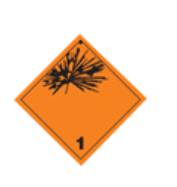
What are Explosives?
Explosives are classed as any goods or materials that are designed to combust or set alight when chemical reaction is triggered.
Explosives 1.1
Goods which pose a mass explosive hazard.
Explosives 1.2
Goods which pose a projection hazard.
Explosives 1.3
Goods which pose a fire hazard and either a minor blast hazard or minor projection hazard.
Explosives 1.4
Goods that present no significant hazard. Items with this classification are only considered dangerous goods when ignited.
Explosives 1.5
Blasting agents. Goods which are very insensitive and do not pose a mass explosion hazard.
Goods within the Explosives Classification include:
- Rockets
- Igniters
- Detonators
- Fuses
- Ammunition and cartridges
- Primers

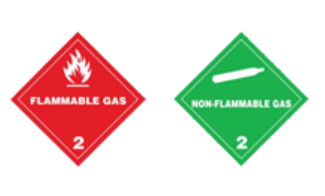
What are Gases?
Gases considered Dangerous Goods are those which are compressed, liquefied or dissolved under pressure
Gases 2.1
Gases which are flammable and pose risk of fire or explosion.
Gases 2.2
Gases which are both non-flammable and non-poisonous often contained at very low temperatures.
Gases 2.3
Gases which are toxic and pose a risk if inhales.
Goods within the Gases Classification include:
- Hydrogen, Acetylene and Propane
- Aerosols
- Lighters and gas cartridges
- Compressed air
- Carbon Dioxide and Helium
- Fire Extinguishers
- Petroleum
- Fertilizer
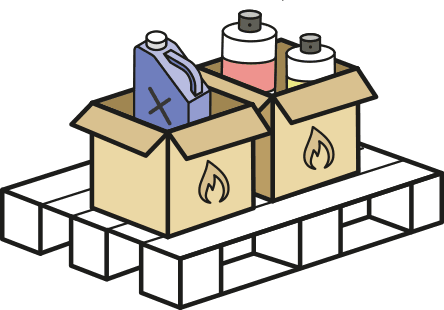
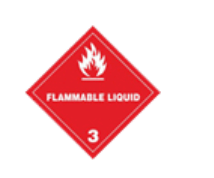
What are Flammable Liquids?
Flammable liquids refer to any liquid or solution which emits a flammable vapour that may pose a threat at certain temperatures.
Flammable Liquids 3
There are no divisions within the flammable gases classification, however, these liquids may vary in their combustion levels.
Goods within the Flammable Liquids Classification include:
- Petrol, Diesel and Fuels
- Paint, Lacquers and Varnishes
- Alcohol and Spirits
- Ethanol
- Perfumes
- Oils
- Pesticides
- Tars


What are Flammable Solids?
Flammable solids include substances liable to spontaneous combustion and substances which emit flammable gases when in contact with water.
Flammable Solids 4.1
Goods that may cause fire through friction or other transportation conditions.
Substances Liable To Spontaneous Combustion 4.2
Goods which are known to spontaneously combust under normal conditions.
Substances Which In Contact With Water. Emit Flammable Gases 4.3
Goods which are known as ‘Dangerous When Wet’ which are known to react with liquids.
Goods within the Flammable Solids Classification includes:
- Batteries
- Seed Cake
- Desensitised Explosives
- Oily Fabric and Fibres
- Alkali Metals
- Metal Powders
- Firelighters and Matches
- Carbon

What are Oxidising Substances?
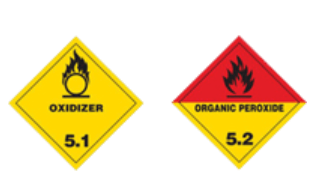
Oxidising Substances include goods which are not necessarily dangerous in themselves but can cause other materials and substances to become dangerous if incorrectly handled. Organic Peroxides are unstable goods which may experience exothermic decomposition which transfers energy to its surroundings.
Oxidising Substances 5.1
Goods which yield oxygen and such may cause or contribute to the combustion of other substances.
Oxidising Substances 5.2
Goods with a bivalent “-0-0-“ structure that derives from hydrogen peroxide where one or both of the Hydrogen atoms have been replaced by organic radical Organic Peroxides and are unstable and may be liable to:
- Explosive decomposition
- Rapid burning
- Increased sensitivity to impact or friction
- Dangerous reactions with other substances
- Causing damage to eyes
Goods within the Oxidising Substances Classification include:
- Nitrates
- Chlorates
- Perchlorates
- Hypochlorites
- Persulphates
- Permanganates
- Peroxides
- Hydroperoxides


What are Toxic and Infectious Substances?
Toxic and infectious substances are goods which pose a health and safety risk to humans or animals through inhalation, ingestion or contact with the skin when incorrectly handled.
Toxic Substances 6.1
Goods which can cause serious illness or death if ingested or in incorrect contact with human skin.
Infectious Substances 6.2
Goods which contain harmful pathogens which can cause serious illness or disease to both humans or animals.
Goods within the Toxic & Infectious Substances Classification include:
- Medical and Biomedical & Clinical Waste
- Medical & Biological Cultures, Samples & Specimens
- Dyes
- Acids
- Nicotine & Nicotine Compounds
- Tear Gas Substances
- Motor Fuel
- Cyanides

What are Radioactive Materials?
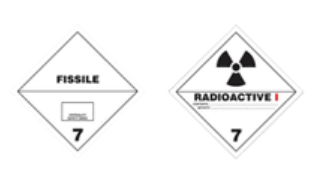
Radioactive Materials are goods containing radionuclides where the activity concentration and total activity exceed the specified values.
Radioactive Material 7
There are no divisions within the Radioactive Material classification, however, these substances can vary in their stability and threat levels, therefore, requiring different labelling to communicate the activity of such materials.
Goods within the Radioactive Material Classification include:
- Isotopes
- Radionuclides
- Uranium Products
- Plutonium Products
- Radioactive Ores
- Medical Parts & Equipment
- Yellowcake
- Density Gauges

What are Corrosive Materials?
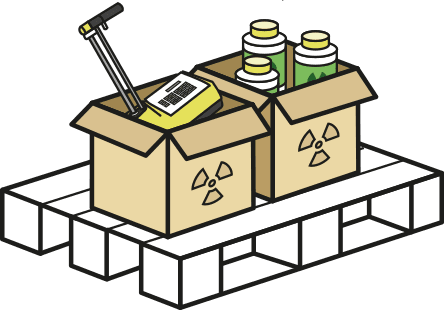
Corrosives are goods which, on contact, can cause severe damage to other materials, living tissues or its surroundings through chemical decomposition.
Corrosives 8
There are no divisions within the Corrosives classification, however, these substances can vary in their threat levels.
Goods within the Corrosives Classification include:
- Acids
- Alkalis
- Alkylphenols
- Amines & Polyamines
- Sulphides & Polysulphides
- Chlorides
- Batteries & Battery Fluid
- Paints & Dyes

What are Miscellaneous Dangerous Goods?
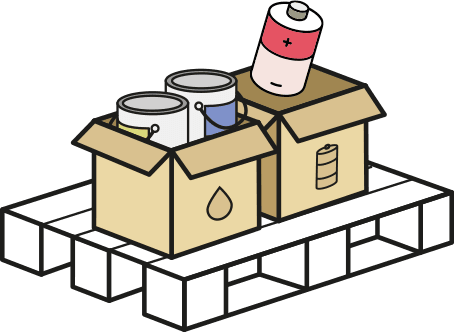
Miscellaneous Dangerous Goods are hazardous goods which do not fit into any of the other 8 classifications. This classification includes but is not limited to:
- Environmentally hazardous substances
- Substances requiring transport at higher temperatures
- Miscellaneous substances
- Genetically modified organisms & microorganisms
- Substances with magnetic properties
- Aviation regulated substances
Miscellaneous Dangerous Goods 9
There are no divisions within the Miscellaneous Dangerous Goods classification, however, these substances vary in the type of threat that they pose to human health, the environment and other materials.
Goods within the Miscellaneous Dangerous Goods Classification include:
- Lithium Batteries & Battery Powered Equipment
- First Aid Kits & Life Saving Appliances
- Asbestos
- Self-inflating Goods
- Dry Ice
- Chemical Kits
- Vehicles
- Airbag Inflators and Modules

Allowing Worldwide Express to package, handle and deliver your goods ensures all items are safe and secure during the delivery process.
Click here to get a quote for shipping your Dangerous Goods.